Forgotten Industries // Le Signal // Field Observation // 2026.07.13–15
Exact nesting site withheld. Public photographs are location-scrubbed derivatives.
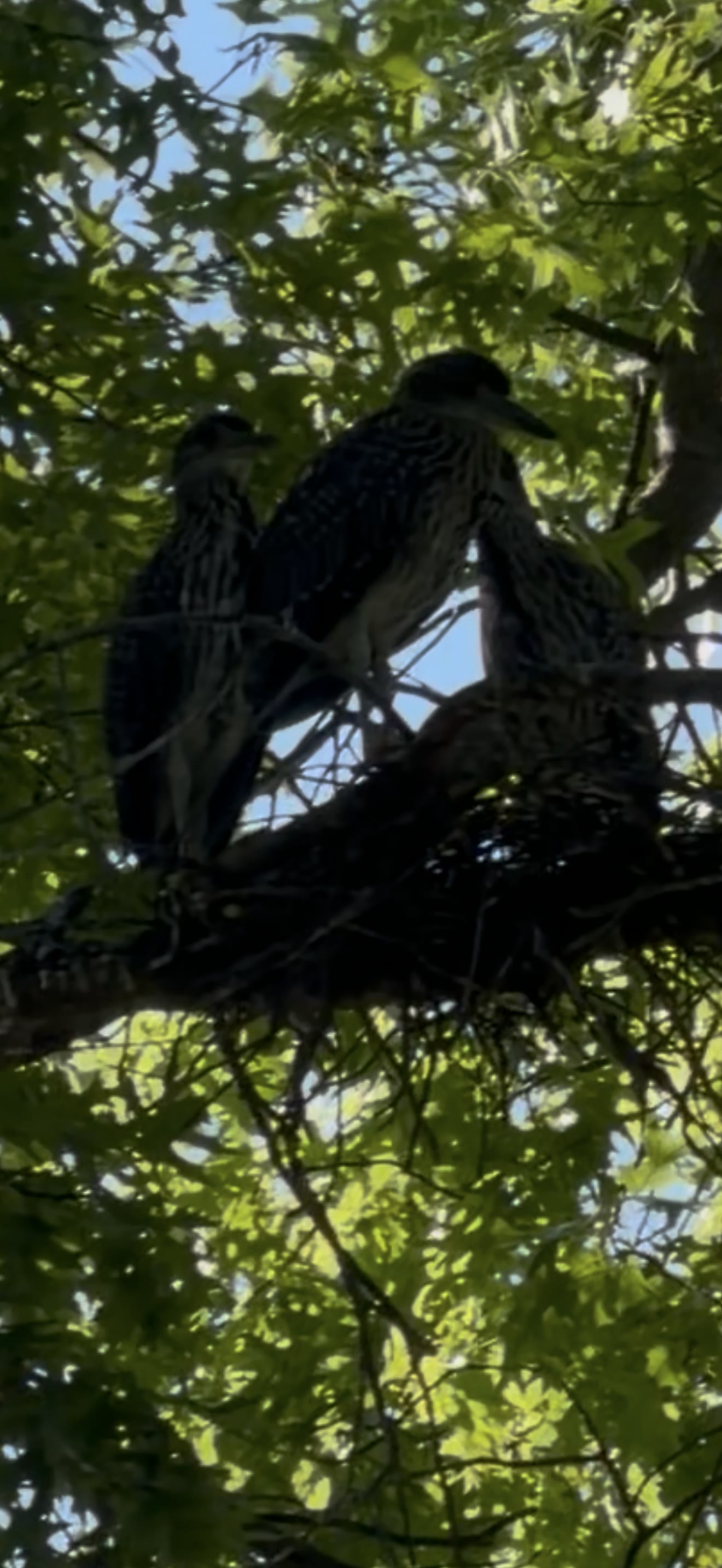
The first record began with one bird.
One juvenile on an automobile. One animal at eye level. One uncertain body selecting the next available height.
The nest corrected the scale.
There were three.
Not three birds inferred from separate appearances. One adult in the middle and two juveniles at either side: three yellow-crowned night herons occupying one structure beneath the canopy.
The first bird had seemed solitary because the encounter was solitary. The later photographs show the system around it.
01. MINIMUM COUNT
The defensible observation is simple: one adult and two juveniles in the nest frame.
The adult occupies the center. The two juveniles flank it. The archive records that age arrangement without asking the image alone to establish individual identity or parentage.
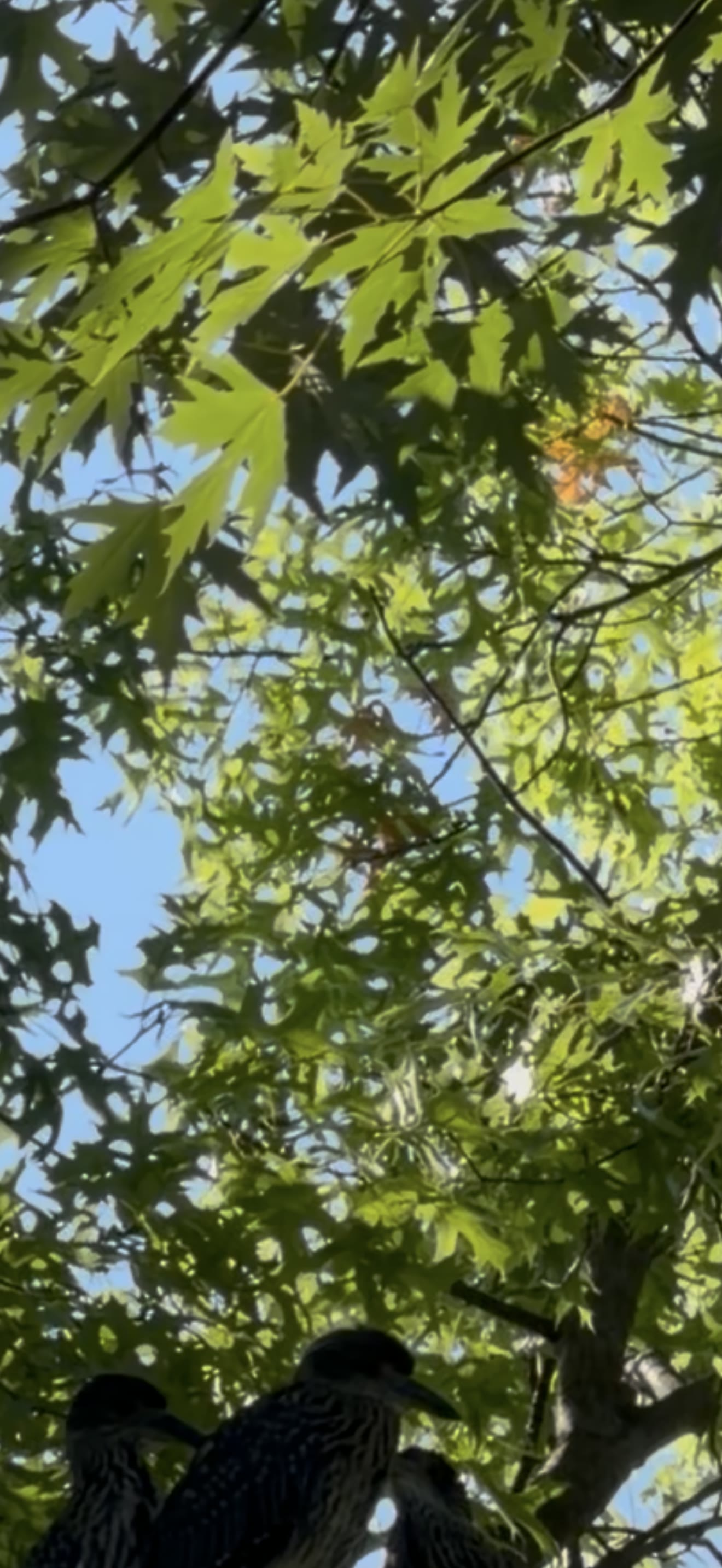
A single encounter can become a symbol very quickly.
A nest resists that compression.
Three animals sharing one small architecture return the observation to biology: cohort, development, proximity, competition, rest, and the ordinary work of surviving long enough to leave the branch.
02. ONE AT GROUND LEVEL
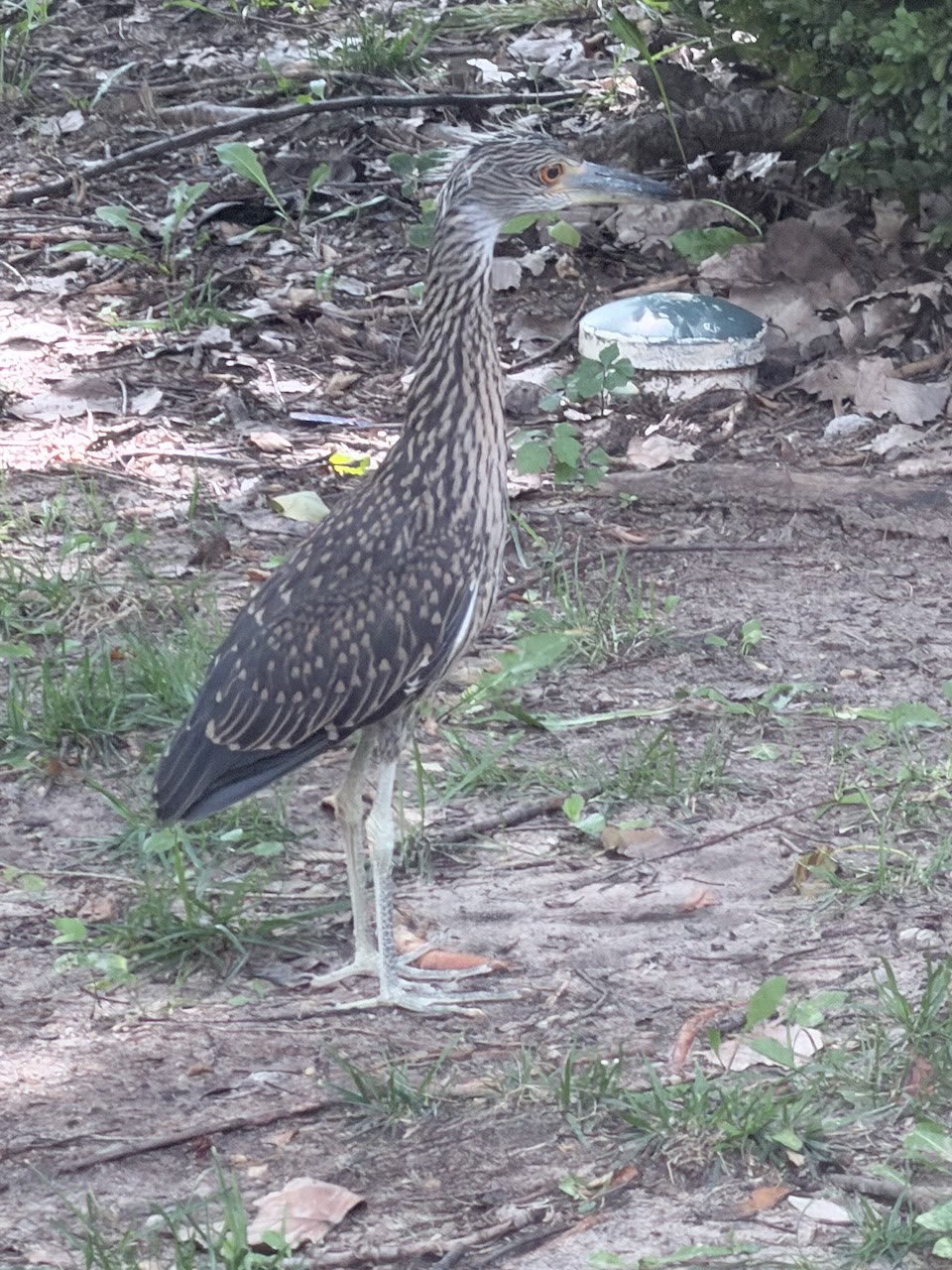
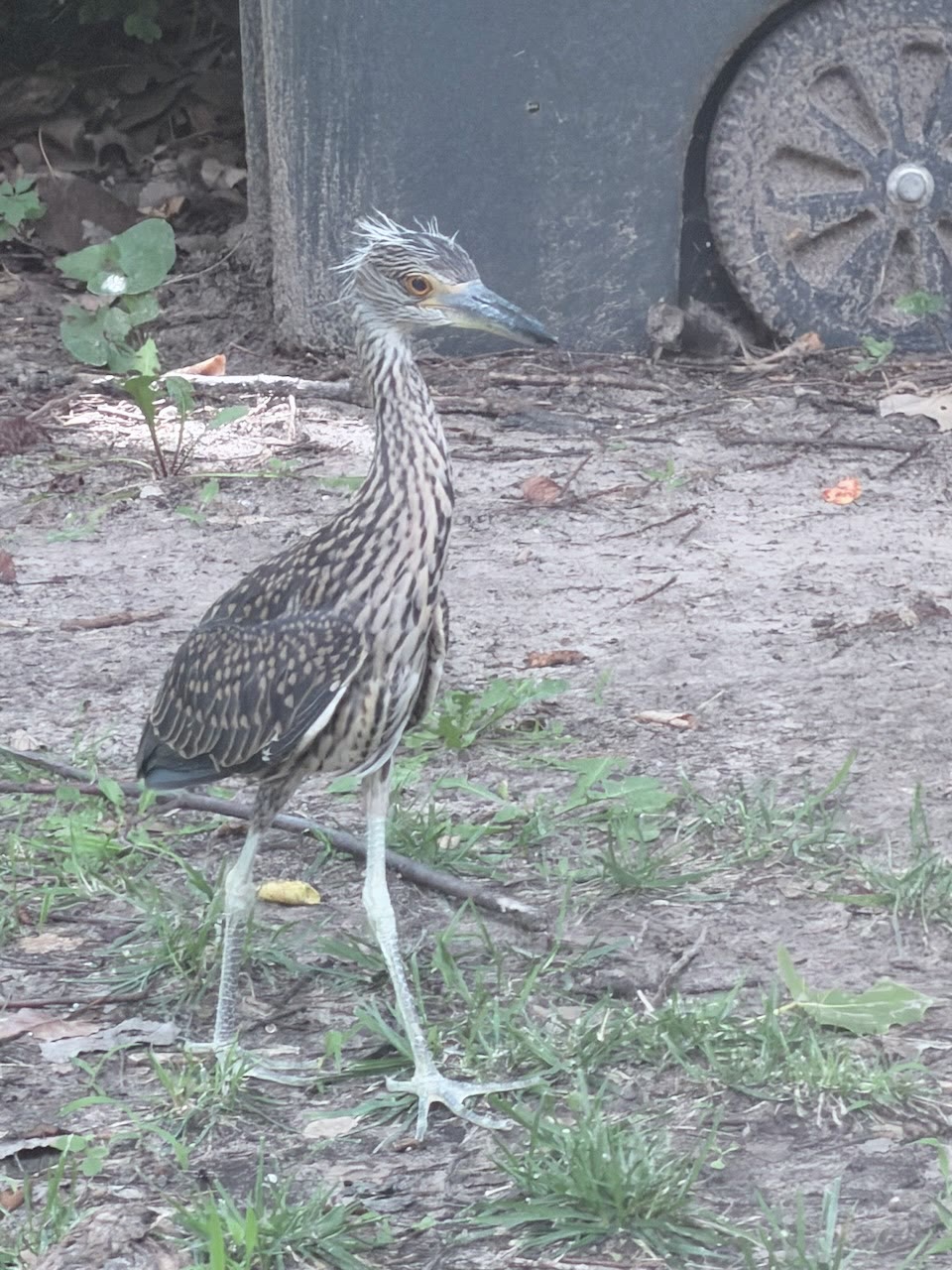
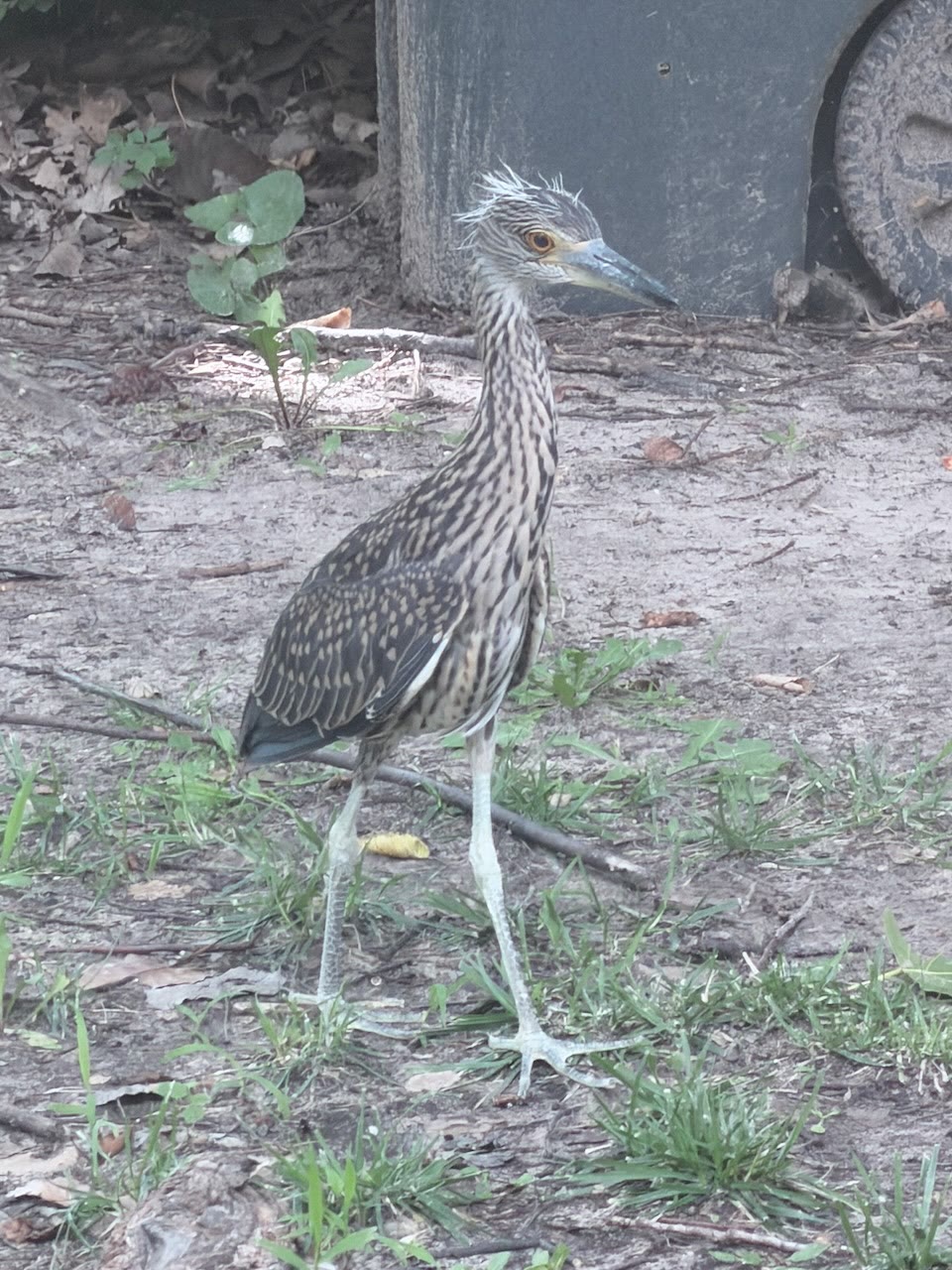
Two days later, a juvenile was photographed on the ground at close range.
The photographs reveal what distance had hidden: the orange-red eye; the blue-gray base of the bill; the fine dark streaks running the length of the neck; pale marks repeating across the folded wing; long legs already carrying an adult scale beneath juvenile plumage.
The sequence does not establish which of the two juveniles this was. It also cannot prove that this was the same individual photographed on the automobile during the July 10 encounter.
The archive records a juvenile from the local nesting group. Individual identity remains unconfirmed.
03. THE FAMILY
The word family is useful here because it changes the unit of attention.
The July 10 field doctrine followed one juvenile through a human-built landscape: automobile, roofline, higher ground. This continuation places that bird—or one like it—beside another juvenile and an adult.
One encounter becomes ecology when it is observed in relation.
The birds are not identical marks. The adult occupies the middle. Each juvenile holds a different edge of the nest. Later, one juvenile stands alone on the ground, but the earlier frame remains part of the record: the solitary encounter belongs to a larger nesting record.
The archive does not need to decide which bird was the emissary.
It needs to preserve the change in scale:
one juvenile observed → one adult and two juveniles confirmed in the nest → one juvenile encountered later
Not omen.
Population.
Not an isolated appearance.
A living system becoming visible through repeated attention.
04. DISPOSITION
The nesting site is not a destination.
Its exact location, embedded metadata, and relationship to any private residence remain withheld. The public record receives only the minimum evidence required to establish the observation.
The field rule remains unchanged:
Observe. Do not handle. Do not feed. Do not disturb the nest. Do not convert proximity into permission.
The juveniles are already performing the difficult work of becoming birds. The adult remains among them.
The archive can watch without making itself the center of that process.
FORGOTTEN INDUSTRIES // FIELD OBSERVATION CONTINUATION
Object: Yellow-crowned night heron nesting group
Species: Nyctanassa violacea
Confirmed nest count: One adult and two juveniles in one frame
Later observation: One juvenile at ground level / close range
Individual identity: Unconfirmed
Site: Exact coordinates withheld
Evidence: Five location-scrubbed public JPEG derivatives
Disposition: Continue observation. Do not interfere.
PRIOR RECORD: The Yellow-Crowned Night Heron
SOURCE SET: FI-PHOTO-005
PHOTOGRAPHIC RECORD: Eleven-image public plate
PROVENANCE: Human–Machine Workthrough
A thing documented is a thing not yet lost.