Forgotten Industries // Le Blog // Field Observation // 2026.10.24 – 2026.11.07
Exact site withheld. Public photographs are location-scrubbed derivatives.
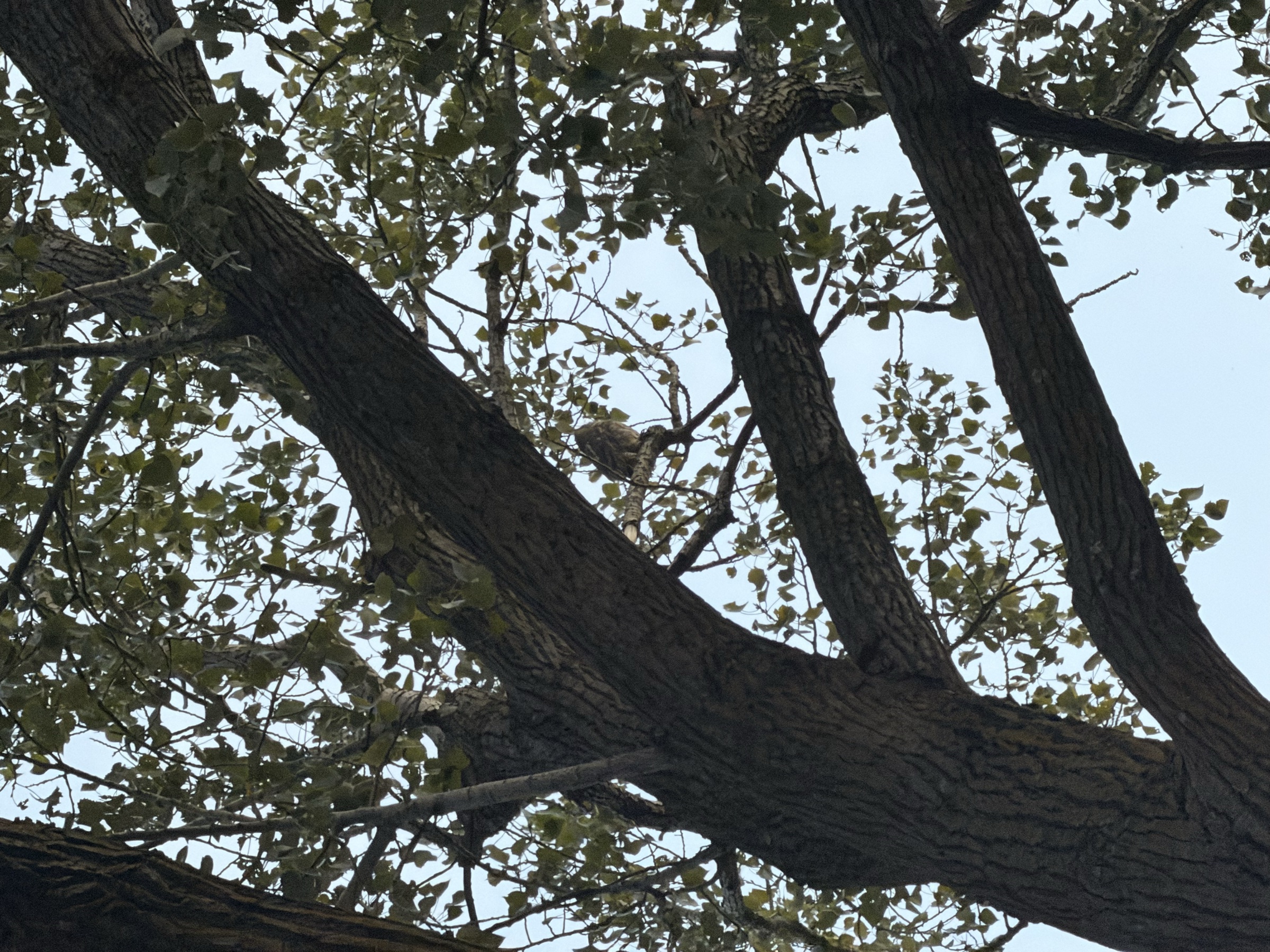
18:52
I have been gazing vertically into the sky again.
I have noticed that I have been feeling somewhat ethereal again. As though life and nature and reality have been increasingly revealing of their more true nature to me. Have you ever felt that life might, in fact, be but a dream?
I yearn for the prose that would allow me to most precisely communicate this feeling, or state of being. Wallflower-y.
I have not felt this way since the period of time observing the Heron Family.
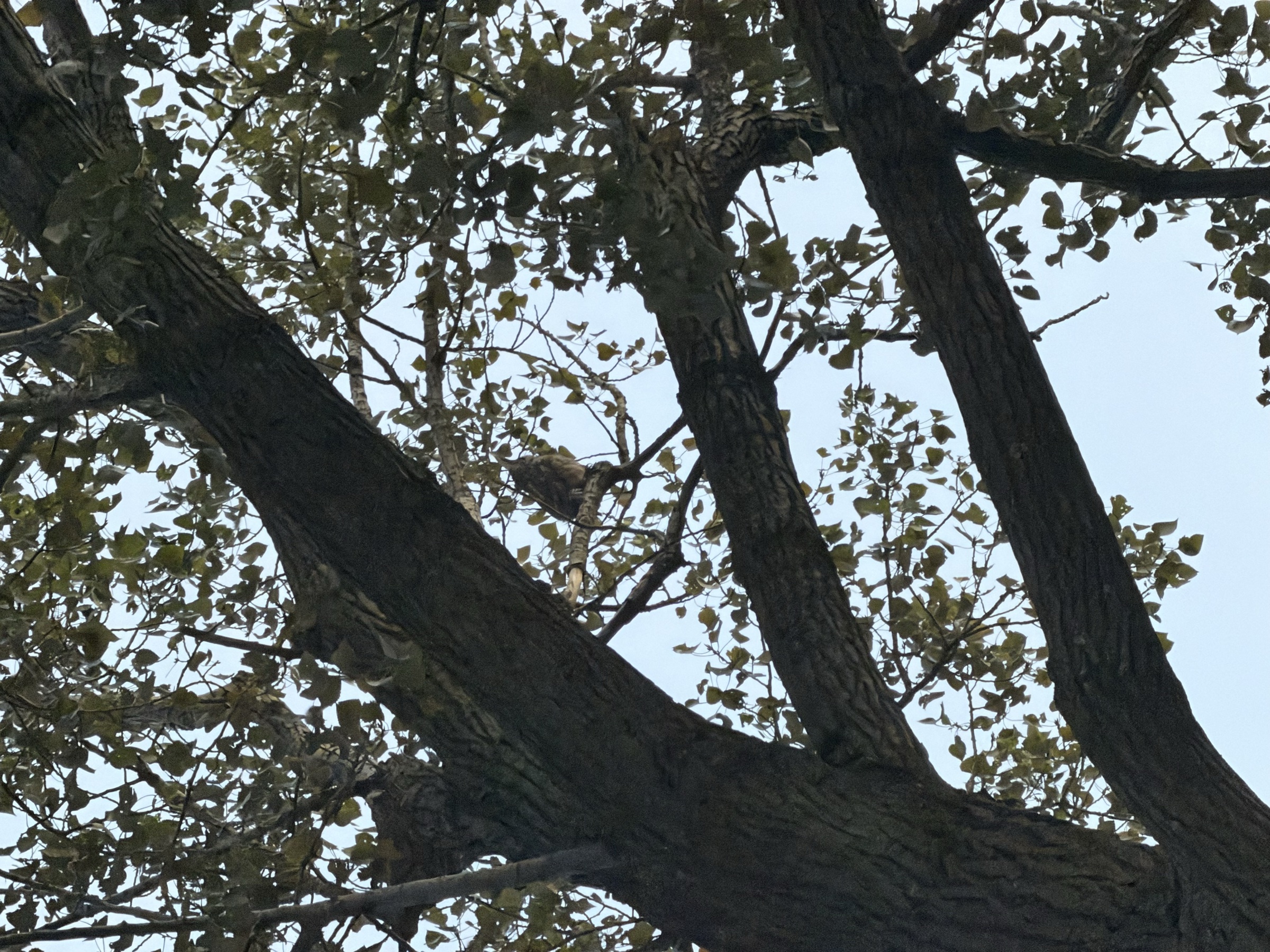
This evening I brought my eyes to the sky the near exact moment a Great Horned Owl (Bubo virginianus) perched around twenty meters above me.
The omen, if I am permitted one…
The note ended there. I did not finish it. I did not yet know what came next.
01. THE OWL
The heron taught me to gain height.
The owl arrived when I had stopped climbing and simply looked up.
Dusk. The light failing. A large bird, barred brown against a pale sky, settled on a side branch of the cottonwood, as though it had been waiting for the field to be noticed.
The owl is a bird of the eye. Forward-facing, enormous, built for the hour when everything else stops seeing.
I took two photographs, thirty-five seconds apart.
I did not finish the record. The omen stayed unwritten.
02. THE SPARROW
Saturday again. Two weeks to the day.
16:30. The same cottonwood. The light going the same way it went for the owl.
The same feeling of happenstance.
Not a raptor. Not a rarity. A house sparrow.
The most ordinary bird. The one sold, in an old text, five for two pennies.
03. IDENTIFICATION
No photograph. Two fields of evidence: what I saw, and what I heard.
Seen: a small bird in gray and brown.
Heard: a plain, repeated cheep.
I checked both against the Cornell Lab's All About Birds account for the House Sparrow. The plumage fits either sex. The male carries a gray head and a rufous neck; the female is buffy brown over gray-brown underparts. The build fits: chunkier and rounder-headed than the native American sparrows, which are not close relatives. The voice fits: the song is "one or a series of cheep or chirrup notes," given by males through much of the year to announce a nest.
The sound is what closed the identification. So the record keeps the sound.
04. THE BIOLOGIST, PART DEUX
The sparrow is not a symbol first.
Passer domesticus. The sparrow of the house. Native to Eurasia and North Africa, the Levant included. Brought to North America in the 1850s and spread across the continent by following people: grain, stables, rail yards, eaves. Every one in Kansas descends from that introduction.
It is not native here. It is not rare anywhere. It has lived beside human dwellings for so long that its scientific name is a description of us.
The owl belongs to the cottonwood. The sparrow belongs to the house.
The cottonwood belongs to Kansas: Populus deltoides, the state tree, the tree that grows where water is.
A bird of the night, a bird of the house, and the tree that held them both.
05. THE EYE
I wanted to call the sparrow the eyes of God.
The method does not permit counterfeit tradition, so I checked.
The sparrow is not the eye. The sparrow is what the eye is on.
Are not two sparrows sold for a penny? Yet not one of them will fall to the ground apart from your Father. — Matthew 10:29
The older Jewish teaching says it more plainly. Hidden in a cave, Rabbi Shimon bar Yochai watched a hunter set snares, and listened for whether Heaven said release or capture:
Not even a bird is caught without Heaven's decree. How much more a human being. — Genesis Rabbah 79:6
The small birds in those passages were very likely this same species. The sparrow in the cottonwood is a descendant of the sparrow in the market.
The owl watches. The sparrow is watched.
I stood beneath both.
06. SEQUENCE
In July I wrote: Not omen. Population.
The sparrow amends it.
A population, every member counted.
The heron rose to see.
The owl was seen by one who looked up.
The sparrow is seen, and needs to do nothing at all.
juvenile heron at eye level → heron family in the nest → owl in the cottonwood at dusk → sparrow in the same cottonwood, fourteen days later
So the omen, if I am permitted one, is this:
Look up.
You are not the only one watching.
The smallest thing in the field is not unaccounted for.
Neither are you.
FORGOTTEN INDUSTRIES // FIELD OBSERVATION CONTINUATION
Objects: Great horned owl; house sparrow
Species: Bubo virginianus; Passer domesticus
Tree: Eastern cottonwood, Populus deltoides
Observation 01: 2026-10-24, 18:50 CDT. Owl perched ~20 m up. Two photographs.
Observation 02: 2026-11-07, ~16:30 CST. House sparrow, same tree. Identified by plumage (gray and brown) and call, checked against Cornell Lab All About Birds. No photograph.
Interval: Fourteen days. Both Saturdays. Both in the last of the light.
Site: Exact coordinates withheld
Disposition: Continue observation. Do not interfere.
PRIOR RECORDS: The Yellow-Crowned Night Heron · The Heron Family
A thing documented is a thing not yet lost.