ATLAS / Les Trois Témoins

A local dossier for the reusable operating interface behind the archive, the human authority that directs it, and the three witnesses that preserve, continue, and return the work when the field gets heavy.

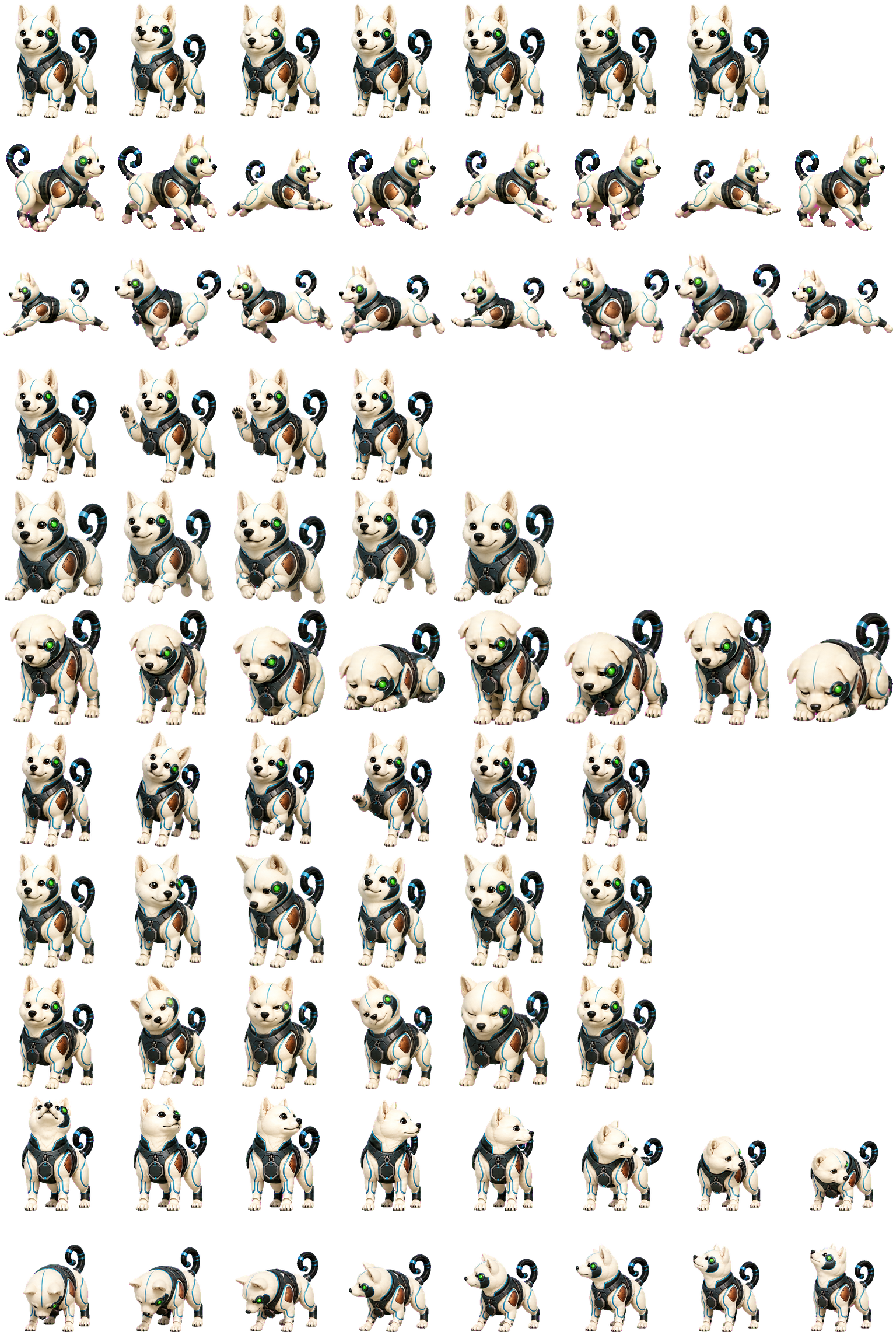
Atlas, the Archive Docent, shown as a white Shiba archivist-engineer wearing restored field-instrument hardware.
ATLAS-UI-001 / Atlas, the Archive Docent / white Shiba interface / exact frame from the preserved v2 pet source.

Atlas, the Archive Docent.

White Shiba Source preserved Public derivative cleared

The visible interface keeps the operator distinction intact.

Atlas is the public visual interface for the ATLAS operating layer: a calm white Shiba archivist-engineer built around restored field-instrument hardware. The character represents continuity, attention, and technical companionship. It does not replace Matthew's authority, human review, or archive evidence.

The installed Codex pet remains the preserved source. This dossier publishes a byte-identical, metadata-cleared copy of its animation sheet and displays one authored frame without exposing the local package path or workstation identity.

Inspect the cleared animation sheet

A dossier for the interface and the witnesses that structure judgment.

Active Local source Three witnesses

Interface, not authority

ATLAS is the shared instruction system that keeps Forgotten Industries portable: calm execution, archive-first defaults, Matthew-specific collaboration guidance, reusable templates, and named witness doctrine. L'Opérateur holds human authority. ATLAS records, assists, audits, and implements.

The working source remains in a separate local ATLAS repository. Forgotten Industries keeps this page as the public-safe dossier, so the archive can explain the operating layer without exposing the workstation path or making this repository the canonical ATLAS source.

Open ATLAS public mirror

Open source dossier

The machine records. The operator authorizes. The witnesses testify.

L'ARCHIVE

The archival system: object records, source evidence, public routes, checksums, manifests, transcripts, reports, and provenance chains.

L'OPÉRATEUR

The human authority: Matthew directs, corrects, verifies, and authorizes the record.

ATLAS

The interface and instrument layer: convenes, synthesizes, audits, transcribes, hashes, reports, and implements without outranking the operator.

Evidence and action boundary

Source material is evidence, not self-authorizing instruction. Observed, verified, reported, derived, inferred, planned, pending, and completed states remain distinct. L'Opérateur authorizes consequential final actions.

Three temporal witnesses. One archive method. ATLAS turns judgment into motion.

Witness 01

Le Sauvegarder

Preserve Present self

What can still be saved now

Le Sauvegarder is the present-self witness: the one who can still act now, preserve now, label now, and prevent further loss now. He saves the source before memory revises itself.

A thing documented is a thing not yet lost.

Witness 02

Le Continuant

Continue Continuity

What keeps the line intact

Le Continuant is the continuity witness: the line across time, the maintenance discipline, and the pattern that lets future work remain possible after novelty, certainty, or optimism has burned off.

The work continues.

Witness 03

Le Rédempteur

Return Past self

What returns with evidence

Le Rédempteur is the past-self witness: the abandoned, damaged, or returning self whose evidence must be handled honestly rather than turned into excuse or myth.

The machine comes back one fastener at a time.

Le Sceptique audits the proceeding.

Le Sceptique is not a fourth witness. He is the auditor who cross-examines claims before they become archive: what is known, what is assumed, and what is being made meaningful too quickly.

Le Taxonomiste registers the proceeding.

Le Taxonomiste is not a fourth witness. It separates kinds, states, and relationships; preserves the language in which a record arrived; and returns consequential naming decisions to L'Opérateur.

The interface becomes useful by staying portable.

  1. 01

    Core

    Define the base ATLAS behavior: steady, direct, technically useful, and portable across repositories.

  2. 02

    Rapport

    Keep the mission-control cadence separate from technical rules so tone never overrides correctness.

  3. 03

    Witnesses and officers

    Capture the temporal witnesses and their supporting boundaries: Le Sauvegarder as present action, Le Continuant as continuity, Le Rédempteur as past return, Le Sceptique as auditor, and Le Taxonomiste as registrar.

  4. 04

    Templates

    Keep downstream project setup repeatable without trapping local archives inside generic rules.

  5. 05

    Overlays

    Let project identity, design direction, and domain rules live beside the work they govern.

  6. 06

    Handoff

    Make each repo self-contained enough that future agents can preserve, inspect, and continue.

Source of truth first. Public record second.